
How to Find the Best Summer Camp Jobs in 2026-27
Find the Right Camp, Become a Stronger Candidate, and Prepare for a Great Summer on Staff
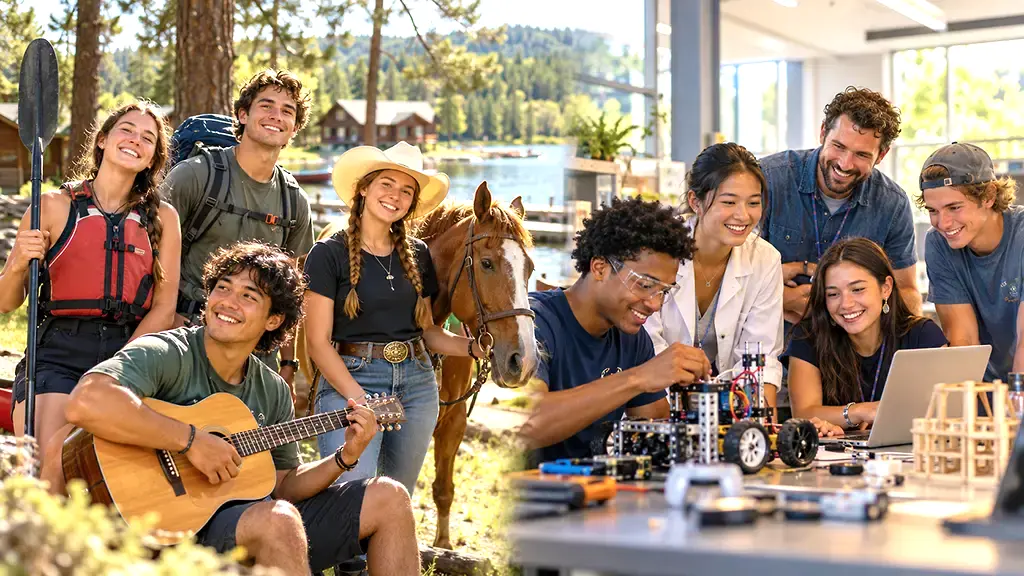
Finding a great Summer Camp Job is about much more than simply finding a camp that is hiring. The best match happens when two things come together: a camp believes an applicant has the qualities, experience, attitude, and skills needed for the role, and the applicant believes the camp will provide the kind of summer experience, responsibilities, environment, and opportunities they are looking for.
That means prospective counselors and staff should be asking two questions throughout the search: “Am I the kind of person this camp is looking for?” and “Is this the kind of camp where I want to spend my summer?”
This 2026-27 Summer Camp Jobs Guide is designed to help answer both questions. It covers what camps may look for in staff, different pathways into camp work, ways to become a stronger applicant, how to research camps, what to expect from applications and interviews, and what to ask before accepting a position.
How to Choose the Best Summer Camp Job
Our new "How to Choose the Best Summer Camp Job" video guide is coming soon. Check back for practical tips on what camps may look for in counselors and staff, preparing to apply, matching your interests and experience with different camp settings and opportunities, and deciding which camp might be the best fit for your summer.
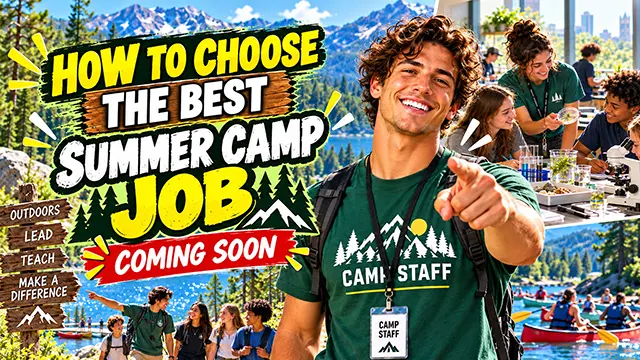
Until then, continue below to explore Summer Camp Jobs Camps, compare programs, and find a great fit for summer 2026-27.
What Are Camps Looking for in Great Counselors and Staff?
There is no single personality, résumé, or background that makes someone the perfect summer camp employee. Different camps and different positions require different skills. A waterfront director, music instructor, cabin counselor, technology specialist, sports coach, office staff member, and program director may all have very different responsibilities.
But many camps are looking for some of the same underlying qualities: maturity, reliability, responsibility, communication, teamwork, patience, enthusiasm, flexibility, good judgment, initiative, and a genuine interest in helping kids and teens have a positive summer experience.
Reliability and Responsibility Matter
Summer camp staff are often responsible for other people, schedules, activities, equipment, facilities, transportation, or important parts of the daily camp program. Camps need people who can be counted on to arrive when expected, follow procedures, communicate problems, accept responsibility, and make thoughtful decisions.
Camps Need People Who Can Work as Part of a Team
Camp can be a highly social working environment. Counselors and staff may live, eat, plan, teach, supervise, solve problems, and spend long days alongside other staff members. Being able to communicate clearly, receive feedback, support coworkers, adapt when plans change, and contribute to a team can be just as important as being talented at a particular activity.
Being Great at an Activity Is Not the Same as Being Great With Campers
A talented musician, athlete, programmer, actor, artist, swimmer, climber, or teacher may bring valuable skills to a camp, but technical ability alone does not automatically make someone a strong camp counselor or instructor.
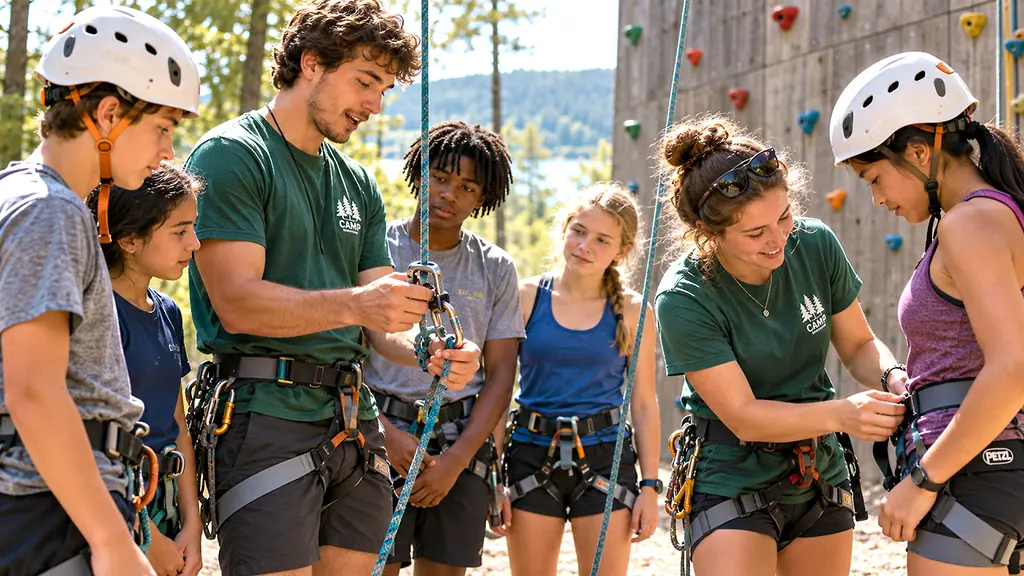
Camps may also look for the ability to explain things clearly, encourage beginners, manage groups, recognize when someone needs help, maintain appropriate boundaries, follow safety procedures, and create an environment where campers feel supported and included.
Leadership Positions Usually Require More
Senior counselors, head counselors, program leaders, unit leaders, department heads, and camp directors may be expected to supervise other staff, organize programs, communicate with families or administrators, solve problems, manage schedules, respond calmly to difficult situations, and help establish the tone of the camp community.
There Is More Than One Path Into Summer Camp Work
Some future staff members grow up attending camp themselves. Their path may begin as a camper and continue through a CIT, LIT, junior counselor, or leadership program before they eventually apply for paid counselor or staff positions.
Other people discover camp work later. They may bring experience from teaching, childcare, coaching, tutoring, sports, music, theater, dance, technology, science, outdoor recreation, lifeguarding, volunteering, student organizations, community programs, or other activities that demonstrate responsibility and an ability to work with people.
Previous camp experience can be valuable, but it is not the only way to become a strong candidate. Applicants who have never attended camp can still point to experiences that demonstrate leadership, patience, communication, teamwork, problem solving, mentoring, instructional ability, or experience working with children and teens.
CIT, LIT, Junior Counselor, and Leadership Programs Are Not All the Same
Counselor-in-Training, Leader-in-Training, junior counselor, and other leadership programs can provide valuable experience and may help prepare participants for future staff positions.
However, these programs vary widely. Depending on the camp and the participant's age, a program may be educational or leadership training rather than employment. Some programs may charge tuition, some may be unpaid, some may provide stipends, and others may eventually lead into paid staff roles.
Prospective participants should review each camp's description carefully and understand the program's age requirements, responsibilities, training, cost, compensation if any, and whether participation is considered employment.
Why Summer Camp Jobs Can Be a Great Fit for College Students and Recent Graduates
A Summer Camp Job can be a great way for college students and recent graduates to put what they are learning to work. Camps may seek staff with interests and experience in education, social work, science, technology, engineering, art, music, theater, sports, business, communications, and many other fields. A computer science student might help teach coding or robotics, a science major might work with STEM or environmental programs, and students studying music, theater, art, business, or other specialties may find opportunities that connect directly with their academic interests.
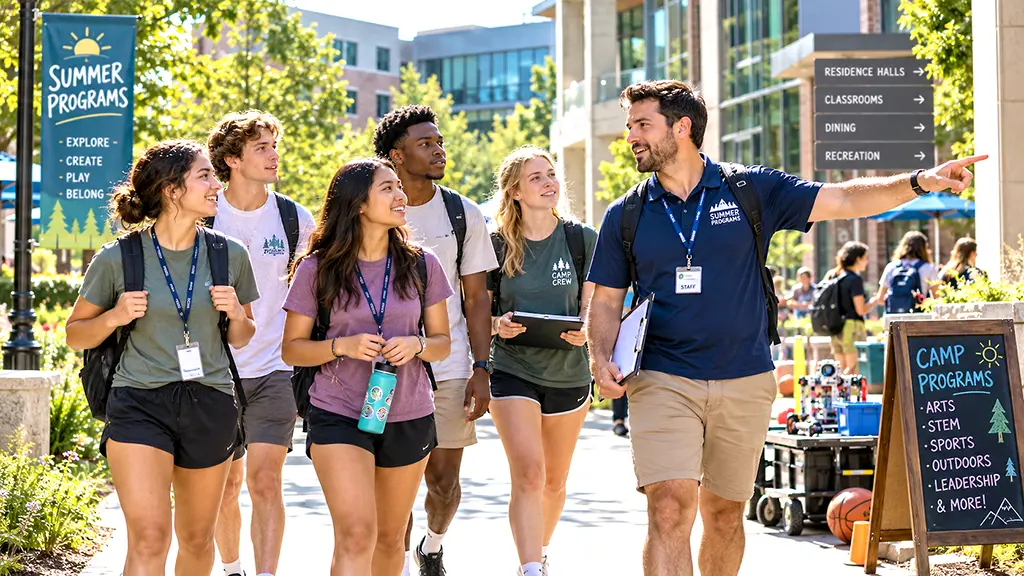
Many specialty camps and summer programs, particularly in technology, science, academic, and arts fields, are also held on major college and university campuses, including campuses of Ivy League and other nationally prominent universities. Although a camp operating on a university campus is not necessarily operated or endorsed by that university, working in one of these programs can give students a chance to experience a different college environment while building leadership, communication, teamwork, problem-solving, teaching, and organizational skills. Those experiences can strengthen a résumé and give students concrete examples of responsibility, accomplishment, and real-world experience to discuss in future job interviews.
How Can You Become a Stronger Summer Camp Job Applicant?
A strong application does more than list previous jobs. It helps a camp understand what an applicant has learned, what responsibilities they have handled, how they work with other people, and what they may be able to contribute to the camp community.
Think About Transferable Experience
Experience does not have to come from another summer camp. Coaching a youth sports team, tutoring, babysitting, mentoring younger students, leading a school club, volunteering, teaching lessons, helping with a theater production, working on a team, supervising younger children, or taking responsibility during outdoor activities may all demonstrate skills that matter at camp.
Prepare a Clear Résumé or Application
Applicants should make it easy for a camp director or hiring manager to understand relevant experience, education, certifications, activity skills, leadership experience, and previous work with kids or teens.
Where possible, specific examples are more useful than vague claims. Instead of simply saying someone is a “good leader,” an applicant may be able to describe a team they helped lead, a group they taught, a program they organized, a difficult situation they handled, or a responsibility they were trusted to manage.
Certifications Can Strengthen an Application
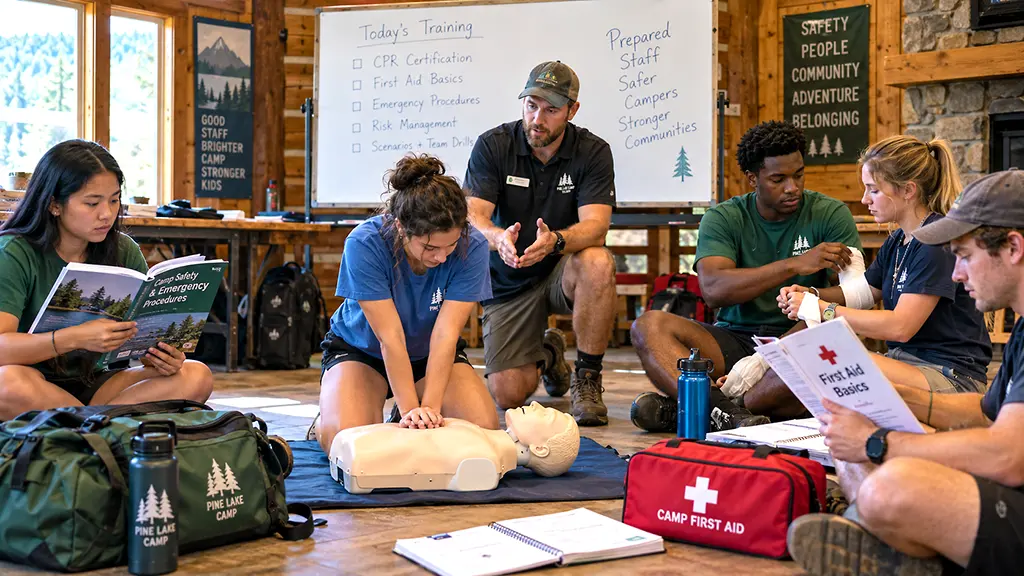
CPR, First Aid, lifeguarding, water-safety, coaching, outdoor, climbing, boating, food-service, healthcare, or activity-specific certifications may be useful or required for certain positions.
Requirements vary significantly by camp and by role, so applicants should check the actual position requirements before investing in a particular certification. Camps may also provide some required training after hiring.
Be Prepared for References and Background Checks
Depending on the camp, role, applicant's age, and applicable requirements, camps may request professional or personal references and may require background checks or other screening before employment begins. Applicants should read the camp's hiring information carefully and be prepared to complete required steps promptly.
Research the Camp Before You Apply
One of the best places to begin is the camp's own website. A camp's website may explain its programs, philosophy, history, facilities, location, camper ages, activities, staff structure, employment opportunities, application process, and contact information.
Many camps have dedicated employment or staff pages that explain available positions, qualifications, dates, application procedures, and whom to contact. Reading that information before applying can help an applicant ask better questions and avoid applying for a role that is clearly not a good match.
Camp Philosophy and Culture
Some camps emphasize outdoor adventure and traditional camp life. Others focus on academics, technology, music, sports, theater, arts, science, special needs programming, faith-based programs, or other specialty experiences.
Applicants should think about whether the camp's mission, atmosphere, program style, camper population, and expectations fit the kind of summer experience they want.
Location, Setting, and Facilities
Camp work can take place in cabins beside a lake, on college campuses, at schools, recreation centers, studios, theaters, gyms, science laboratories, sports facilities, or other settings.
Prospective staff should understand where they will work and, for residential positions, where they may live. Housing, bathrooms, laundry, internet access, staff areas, transportation, climate, physical terrain, and the distance from nearby towns or services may all affect the experience.
Safety, Health, and Supervision
Applicants should understand how the camp approaches staff training, camper supervision, medical needs, emergencies, activity safety, and communication when problems occur.
Useful questions may include whether medical staff are on site, what happens if a camper or staff member becomes sick or injured, what safety training staff receive, and what certifications are required for specialized activities.
What Does a Typical Day Really Look Like?
The words “summer camp job” can describe very different daily experiences. Some staff may supervise campers from early morning through evening programs. Others may teach scheduled specialty activities, support day-camp programming, work in kitchens or offices, manage equipment, assist with transportation, or work in administrative or leadership roles.
Applicants should understand the expected schedule, evening or weekend responsibilities, planning time, staff meetings, time off, and how much of the role involves direct camper supervision.
Meals, Housing, Transportation, and Daily Life
For residential positions especially, employment conditions extend beyond working hours. Staff may want to ask about meals, dietary accommodations, housing arrangements, laundry, transportation, personal vehicles, internet or phone access, staff storage, and what they are expected to bring for the summer.
The Summer Camp Application and Interview
Once an applicant finds a camp that seems promising, the application and interview process is an opportunity to show more than qualifications on paper.
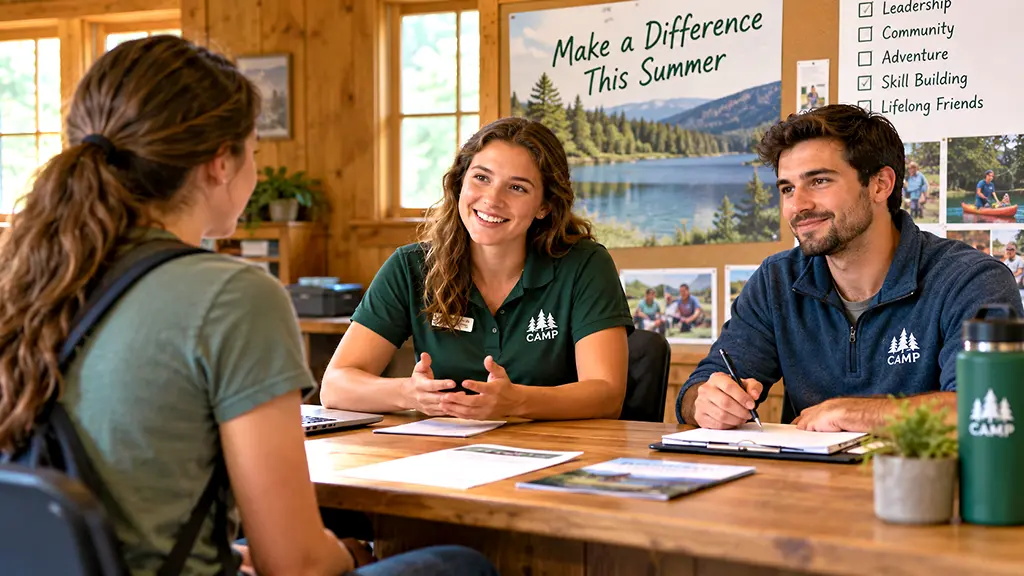
Camp directors may be trying to understand how an applicant communicates, how they respond to responsibility, whether they are comfortable working with kids and teens, how they handle teamwork and conflict, whether they can adapt when plans change, and whether they genuinely understand what camp work involves.
Be Ready to Explain Why This Camp Interests You
A thoughtful answer usually says more than “I love summer camp.” Applicants who have researched the camp can explain which programs, activities, age groups, responsibilities, traditions, philosophy, or opportunities appeal to them and how their own experience could contribute.
Use Real Examples
Interviewers may ask about times an applicant demonstrated leadership, handled a difficult situation, worked with a team, solved a problem, helped a younger person, taught a skill, responded to feedback, or remained calm when something did not go as planned.
Thinking through a few real examples before an interview can make it easier to answer those questions clearly and honestly.
The Interview Works Both Ways
Applicants are not only trying to convince the camp to hire them. They are also learning whether they would actually want to work there.
A camp interview is one of the best opportunities to ask questions about responsibilities, supervision, training, schedules, living arrangements, staff culture, compensation, time off, program expectations, and anything else that could affect the summer.
Questions to Ask Before Accepting a Summer Camp Job
Before accepting an offer, prospective staff should make sure they understand what the camp expects and what the camp is offering in return.
What Will I Actually Be Responsible For?
Ask about the specific role, camper age groups, activity responsibilities, supervision duties, evening or weekend expectations, planning responsibilities, and whether duties may change during the summer.
What Training Will I Receive?
Find out when staff training begins, whether attendance is required, what topics are covered, whether training is paid when applicable, and whether additional certifications must be completed before arrival.
What Are the Employment Dates and Schedule?
Ask about arrival dates, orientation, the final day of employment, typical working hours, time off, staff meetings, weekend responsibilities, and whether there are responsibilities before campers arrive or after campers leave.
What Are the Housing and Meal Arrangements?
For residential camps, understand where staff live, whether counselors live with campers, what meals are provided, what personal items staff should bring, and what facilities are available during time off.
How Does Compensation Work?
Compensation structures vary widely. Applicants should understand the stated salary, stipend, hourly pay, or other compensation arrangement; when payments are made; and whether housing, meals, training, travel assistance, or other benefits are included.
What Happens if Someone Gets Sick or Injured?
Ask about medical staff, emergency procedures, staff illness policies, workplace injuries, activity-specific safety procedures, and how the camp communicates when a serious problem occurs.
Who Will Supervise Me?
Understanding the staff structure can help an applicant know who provides training, feedback, support, and day-to-day direction. It can also clarify how problems or concerns should be handled during the summer.
Is This Summer Camp Job Really the Right Fit?
A well-known camp is not automatically the best workplace for every applicant, and a highly qualified applicant will not necessarily be the right fit for every camp.
The goal is to find the place where expectations match.
Prospective staff should be able to answer both of these questions with confidence: “Can I give this camp the maturity, responsibility, energy, skills, and commitment it needs?” and “Can this camp give me the responsibilities, environment, support, experience, and summer I am looking for?”
That is what finding the best Summer Camp Job really means.
Ready for the Next Step?
Still Deciding Whether Camp Work Is for You?
Explore our Top 10 Reasons to Work at a Summer Camp for a closer look at the friendships, leadership, experience, responsibility, skills, and memorable summer experiences camp work can offer.
Ready to Start Exploring Camps?
Visit our 2026-27 Find Your Summer Camp Job page to discover camps that are hiring or accepting applications for counselors, staff, leadership candidates, CITs, LITs, and related summer opportunities.
Are You a Camp Owner or Director?
If your camp is seeking counselors, activity staff, specialists, support staff, leadership candidates, CITs, LITs, junior counselors, or other summer applicants, visit our Submit Jobs Info page.
© TheBestCamps.com - ALL RIGHTS RESERVED.
In addition to our 2026-27 Summer Camp Jobs Directory , we have also created Special Interest Camp Directories covering music, sports, technology, adventure, arts, and many other camp settings. These directories can help you explore the kinds of camps where you may want to work or participate in a junior leadership pathway.
You can go directly to any of our other 2026-27 Special Interest Camp Directories from the list in the black bar at the bottom of this page.
HOME | WHY WORK AT A SUMMER CAMP? | FIND CAMP JOBS | 2026-27 CAMP JOBS GUIDE | CAMP STAFF STORE | SUBMIT JOBS INFO
